
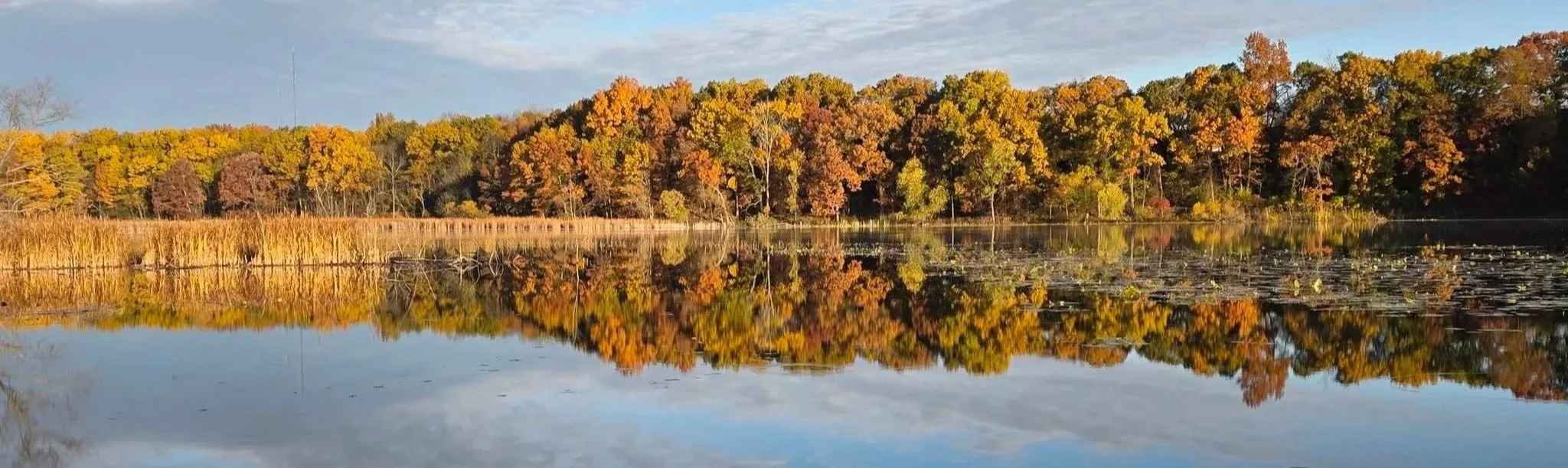

April 2, 2021 | WMU recently conducted a prescribed burn in two different areas of the Asylum Lake Preserve. A number of acres of the prairie along Drake Rd. and a smaller section of forest along the southeast side of the lake were set on fire and carefully monitored by Plantwise LLC, a professional crew hired by the Management Council. Local firefighters and volunteers assisted the crews. These burns have been conducted a few times in the Preserve and are a tool to help restore the ecosystems to a more natural state. They help to control invasive species, unwanted weeds, encourage new growth and seed and flower production of native species, as well as welcome new insect and animal species to the area. The burn has been viewed as very successful and new growth can already been seen.

New Shadow Boxes at Entrance Focus on Seasons
ALPA has redesigned the shadow boxes at each entrance to the Preserve. We plan to update these seasonally and would love to hear your thoughts and comments on how they enhance your experience. Make sure to stop and take a look, learn and enjoy this natural space. Happy Spring!


Beavers Take Up Residence
(January 2021) As many of you know a group of beavers has taken up residence on the south side of the lake near the peninsula and have been cutting down trees for over a year. ALPA and WMU have consulted with environmental experts and we have been encouraged to leave them alone for the time being, and take some protective measures where needed. Since they do their work at night we hope everyone will tread carefully and quietly and let them rest during the day. Here is a link to recent article.


New Brochure and Trail Markers
(January 2021) ALPA and the Asylum Lake Preserve Management Council have been working together on two important initiatives over the past few months: Committees have been working on marking and describing the trails to make it easier for those visiting the preserve to enjoy its beauty and protect its natural features and living things as well, especially by staying on the trails. ALPA has created a new brochure with the updated information describing interesting sights and facts relating to each trail. Trees throughout the Preserve have been marked with blue, green, red and yellow diamonds to indicate the major trails. You can find the complete brochure and maps at all of the three entrances (in the near future) as well as in pdf form on the Trail Maps page in this website.

Vandals Destroy Bike Racks
At the beginning of October, vandals ripped off the dog poop bag dispenser and destroyed it, they also ripped out all three bike racks disturbing the bricks. WMU has taken steps to repair the damages. While nearly everyone who uses the Preserve is careful and considerate of this natural treasure, we hope everyone will treat it with care and concern for all who visit and the creatures who live there.


ALPA Board Members Spruce up Parkview Entrance
On Saturday September 26, 2020 ALPA board members joined Paul McNellis to spruce up the entrance area on Parkview. Members trimmed and cleared weeds around signs and spread mulch to keep the weeds down. A water bag was placed around the tree planted recently in memory of Arthur Falk who was an ardent supporter of the Preserve. We are planning more projects in the future and will need some volunteers. Contact us to sign up.
August, 2020 ALPA Board Approves Statement Supporting Keep Kalamazoo Wild

The board of directors of the Asylum Lake Preservation Association endorses the effort of the Stewards of Kleinstuck's "Keep Kalamazoo Wild" campaign to purchase twelve acres adjacent to the Kleinstuck Preserve in order to keep it undeveloped. Especially, since we understand the devastating impact of development on the border of precious green space in the city, we feel an urgency to make sure that this land is purchased by the Stewards to prevent a possible development of over 100 housing units on the land at 2000 Hudson Street. We invite our members and friends to visit the Keep Kalamazoo Wild website: keepkalamazoowild.com to find out the details of the campaign and how to contribute. The purchase of the land and the arrangements for holding it are secure; all that is needed is financial support from the community.
Garlic Mustard Has Got to Go
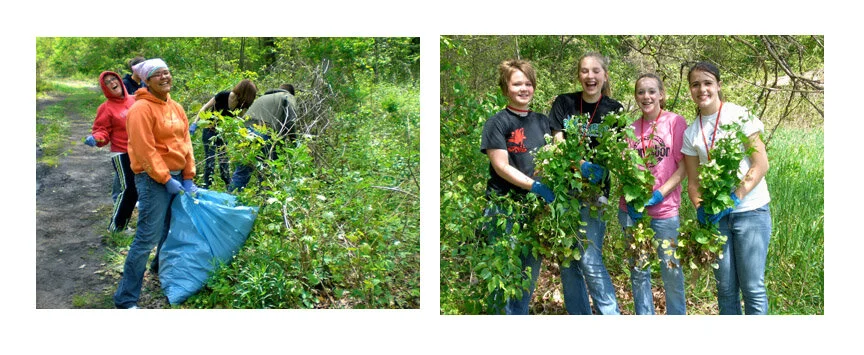
If you’re a gardener or a conservationist, you know this plant. It leaps into any space it can find and chokes out anything (like native grasses, trillium, other beautiful flowers,) and even after it’s pulled out leaves a chemical in the soil so that nothing can take its place unless carefully planted there, thus leaving that space for it to invade again. This is why we have the "garlic mustard army," which pulls this noxious invader every spring in Asylum Preserve before it sprouts seeds and gets even worse. When possible, WMU includes garlic mustard pulls in its public outreach events to help control what has become one of the preserve's most persistent invasive plants. A garlic mustard decomposition area is dug at the preserve each year so the collected plants can be buried on site as a more environmentally friendly alternative to sending the weeds to a landfill.
Where Youngsters Learn to Love the Land

Students journal and experience nature up close up as they learn to be stewards of the land at the Asylum Lake Preserve
The day starts with Buster Bronco welcoming third graders to the 274-acre Asylum Lake Preserve. The 150 students from four schools – Mattawan Early Elementary, Montessori School in Kalamazoo, El Sol Elementary and Woodward Magnet of Kalamazoo Public Schools – are about to spend the day on the land. The day grew from the Kalamazoo No Child Left Inside Initiative developed by the Kalamazoo Nature Center and is rooted in the understanding that children who have positive experiences outside are more likely to become conservation stewards. Its goal is to get students outdoors to explore, observe, appreciate and connect with the natural environment and each other.
The program has been ongoing for four years now. It started with a pilot program in 2010 for 68 students and has welcomed nearly 150 students for the day in each of the subsequent years.
The way it works is children participate in activities at stations set up throughout the Preserve. Western Michigan University students, serving as nature guides, lead the students from station to station where they take samples from Asylum Lake, study water ecology, and learn about invasive species by pulling out garlic mustard plants.
The youngsters also practice journaling and build leadership skills throughout the day.
The elementary students have the opportunity to build relationships with youngsters from other schools as they are encouraged to team up with them for their activities.
About 20 volunteers help make the day possible
The program encourages youngsters to be curious about nature.
The event is organized by the University's landscape services department and president's office. It was created by an employee from each of those units to complement the program developed by the Nature Center and local public schools in partnership with WMU.
What Do These Two Creatures Have In Common?
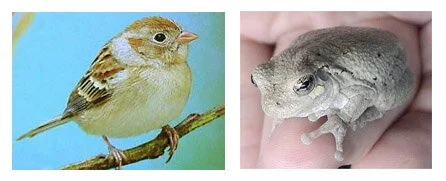
A Chipping Sparrow and a Gray Frog
You wouldn’t think this frog and chipping sparrow have a lot in common--other than they both live in the Asylum Lake Preserve and they depend on the protection of their habitat here to survive. But they share another trait – they both change their calls or songs when their environment is filled with the noise that we humans make, especially traffic noise.
Since the Asylum Lake Preserve has in fact a lot of background noise, often a whole lot of background noise, it’s a good place to find out about those changes that our animal friends make in something so basic as their calls to each other.
Two graduate assistants in the WMU Biology Department working with WMU Assistant Professor in Biological Sciences Sharon Gill are comparing the calls of the animals at Asylum Lake Preserve with those at a nearby preserve, one which is far away from “anthropogenic noise” (the noise we create).
It’s one of the adjustments animals have to make to our presence that we don't often think about.